
Short answer: treat every piece you send to a job worker as part of the job card, send it on a challan, record what comes back and what is rejected, and bill the job work against that same challan. When all of this lives in one system, you always know what is out, with whom, and what it cost.
Why job work is hard to keep track of
Most machine builders and engineering workshops send some operations outside: heat treatment, induction hardening, gear hobbing, zinc plating or powder coating. The parts leave the shop on a challan, come back in lots, and some pieces may be rejected. When challans live in a book, receipts in a register and bills in accounts, three questions become hard to answer quickly:
- Which parts are still with which vendor, and since when?
- How many pieces came back, and how many were rejected?
- Does the vendor’s bill match what was actually received?
The GST side, in brief
Under GST, goods sent to a job worker move on a delivery challan rather than a tax invoice. Section 143 of the CGST Act generally expects inputs to come back within one year and capital goods within three years, and the principal reports these movements in Form ITC-04. The job worker’s charges are a taxable service, so their bill carries CGST and SGST, or IGST for inter-state work. Good records of what went out and what came back make all of this much easier.
This article is general information, not tax advice. Check the current rules and due dates with your tax adviser.
A simple flow that works
- Plan the outside step in the job card. The operation, for example gear hobbing, sits in the part’s route next to in-house steps such as turning and grinding.
- Send on a challan. Record the vendor, the parts, the process and the quantity sent.
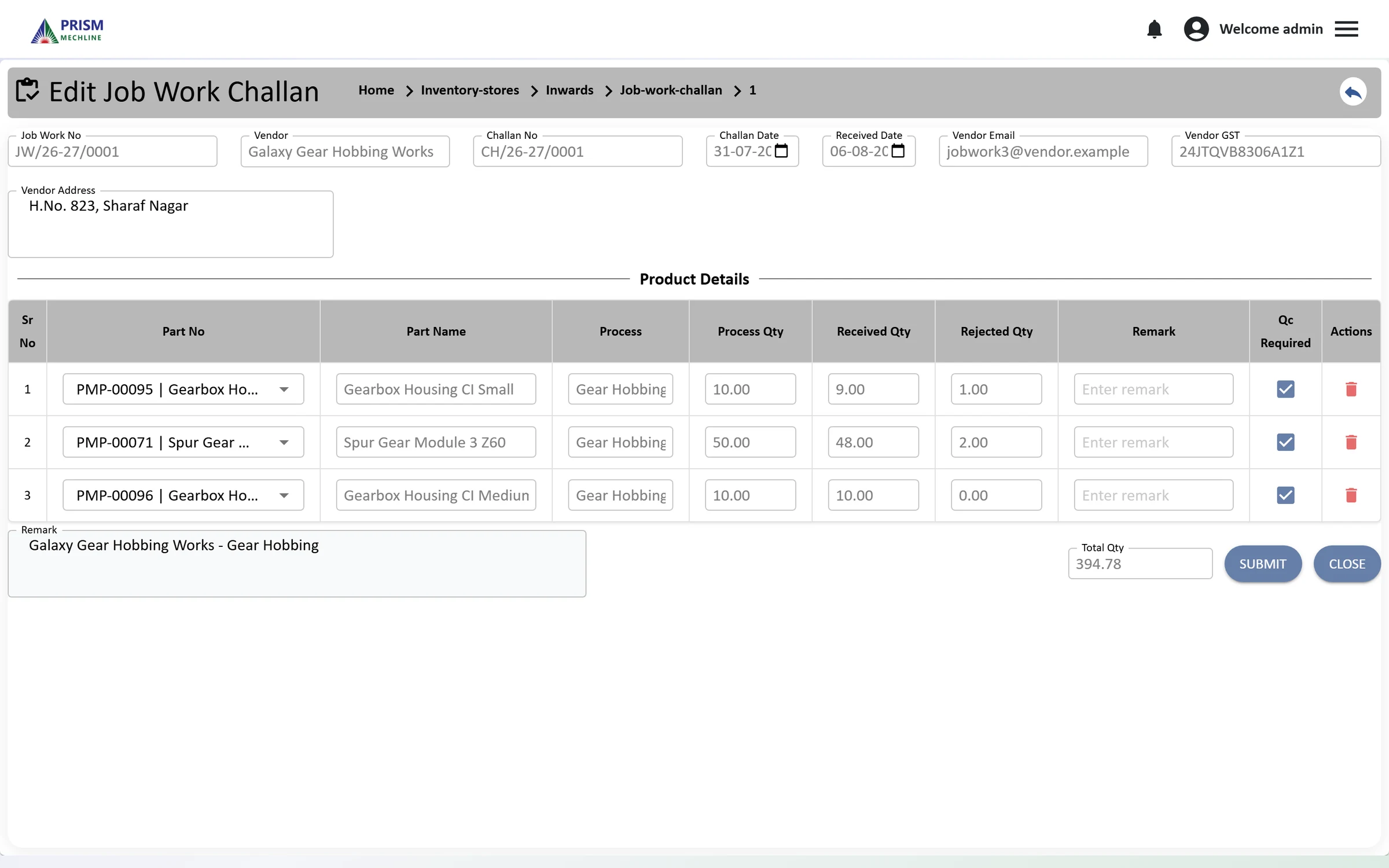
- Receive against the challan. Record received and rejected quantities, and flag lots that need QC.
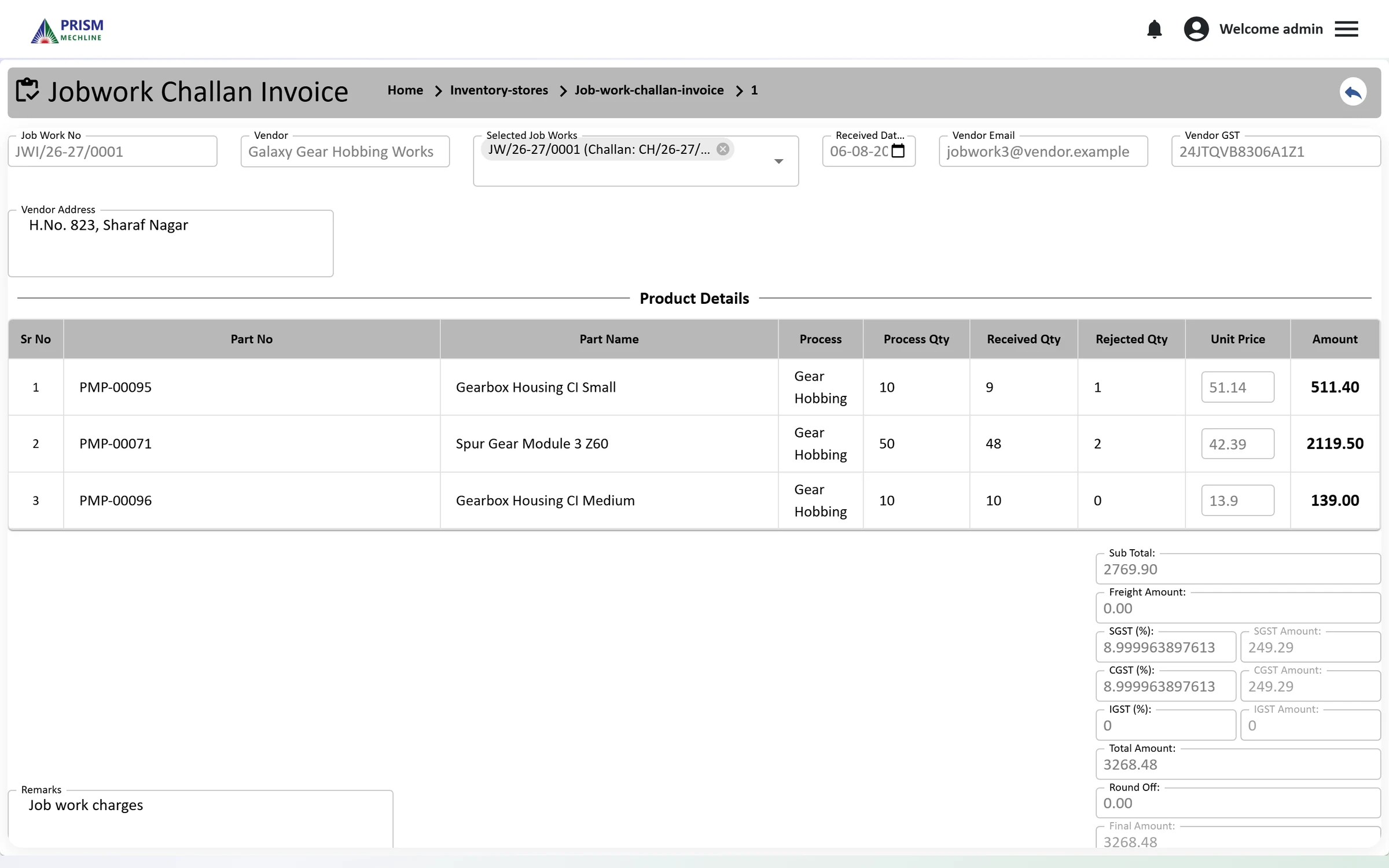
- Bill against the challan. The job-work invoice takes its quantities from the challan, with the unit price and GST worked out.
How Prism Mechline handles job work
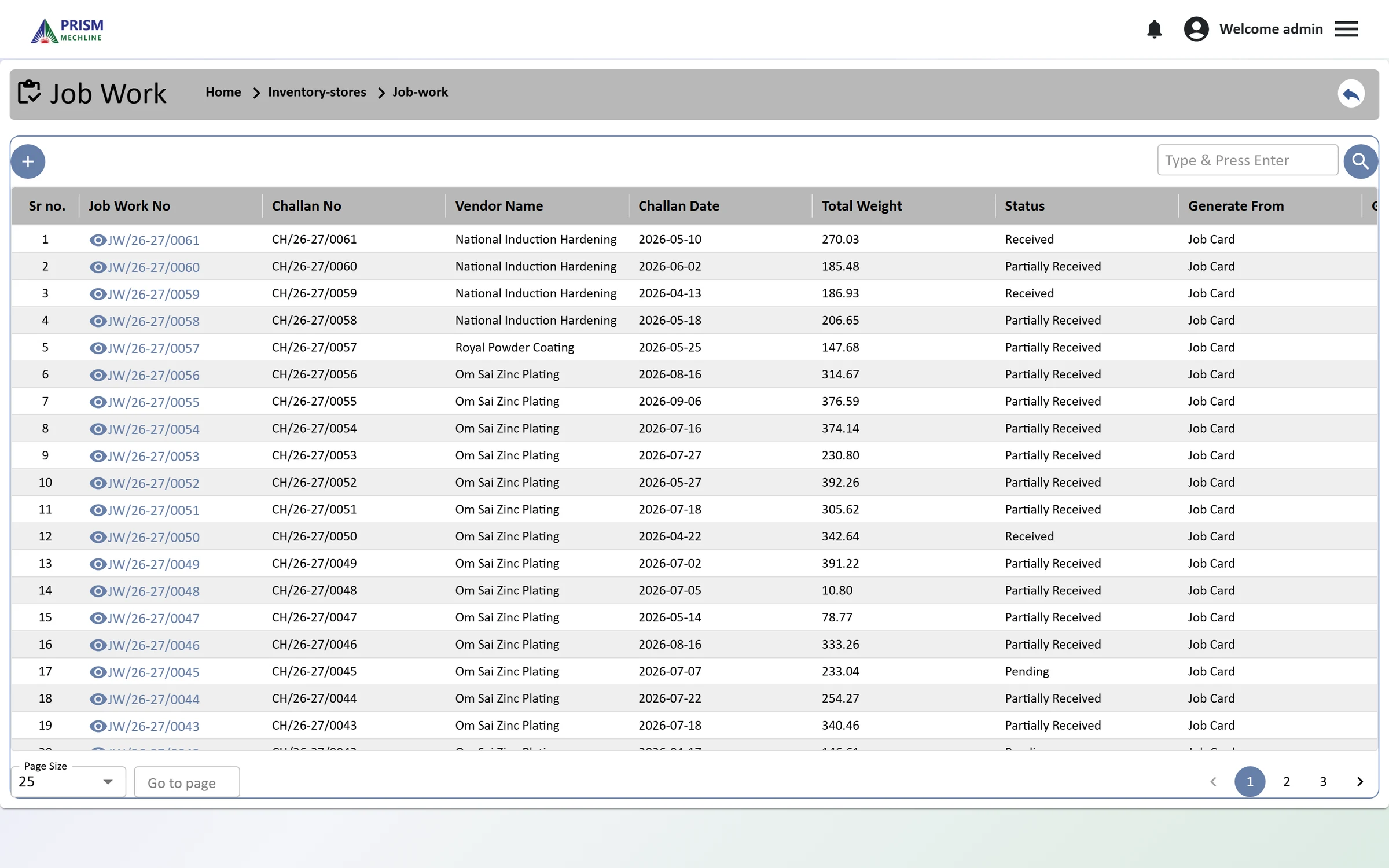
Prism Mechline is a manufacturing ERP for machine builders and engineering workshops by PRISM Technical Services. Outsourced steps such as heat treatment, gear hobbing, plating and powder coating are part of the job card. They are sent to job-work vendors with challans, tracked as Pending, Partially Received or Received, and billed through job-work invoices with GST.
Frequently asked questions
What is job work in manufacturing?
Job work is when a manufacturer sends its own material or parts to another business, the job worker, for a process such as heat treatment, plating or gear hobbing, and gets them back afterwards.
Why should received and rejected quantities be recorded per challan?
It shows exactly what is still with the vendor, which pieces failed, and lets you check the vendor’s bill against what actually came back.
Can job work be part of the job card?
Yes. In Prism Mechline, an outsourced step sits in the job card alongside in-house operations, with the vendor and sending and receiving dates.